


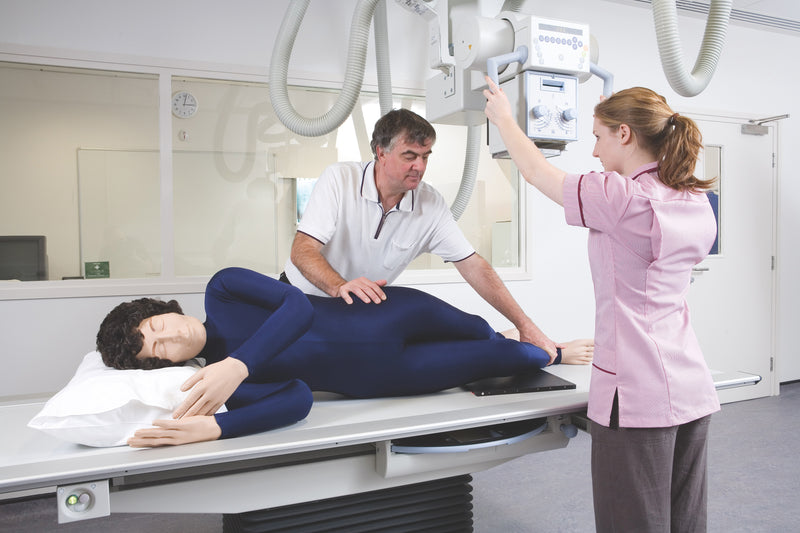
The X-Ray Radiographic Positioning Manikin is a life-size training simulator designed for teaching radiographic positioning, patient handling, and imaging procedures without exposing patients or students to radiation. Widely used by radiography programs, this simulator allows learners to practice correct positioning techniques in a safe and controlled environment.
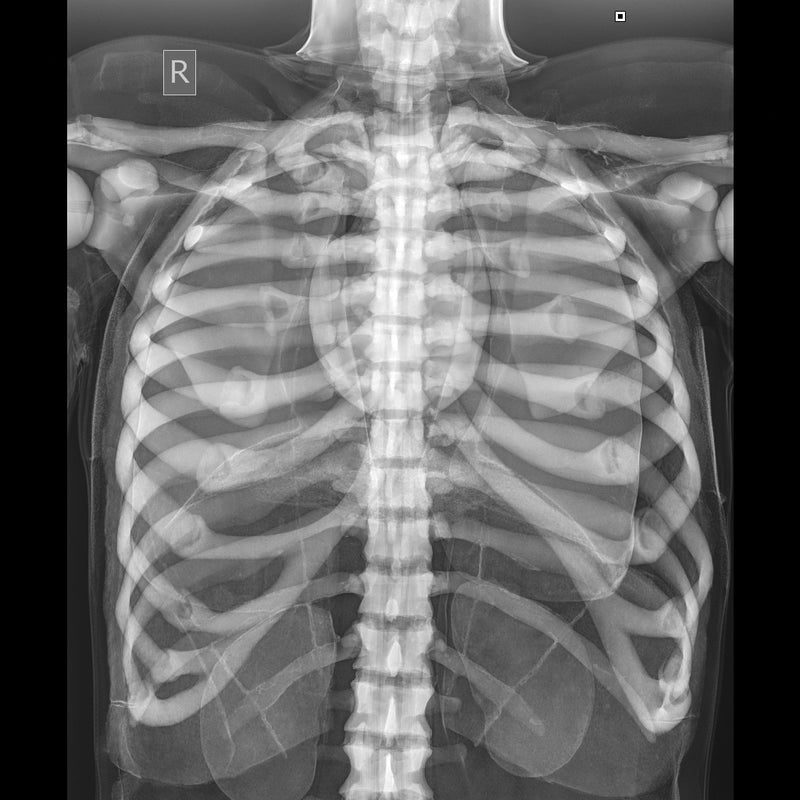
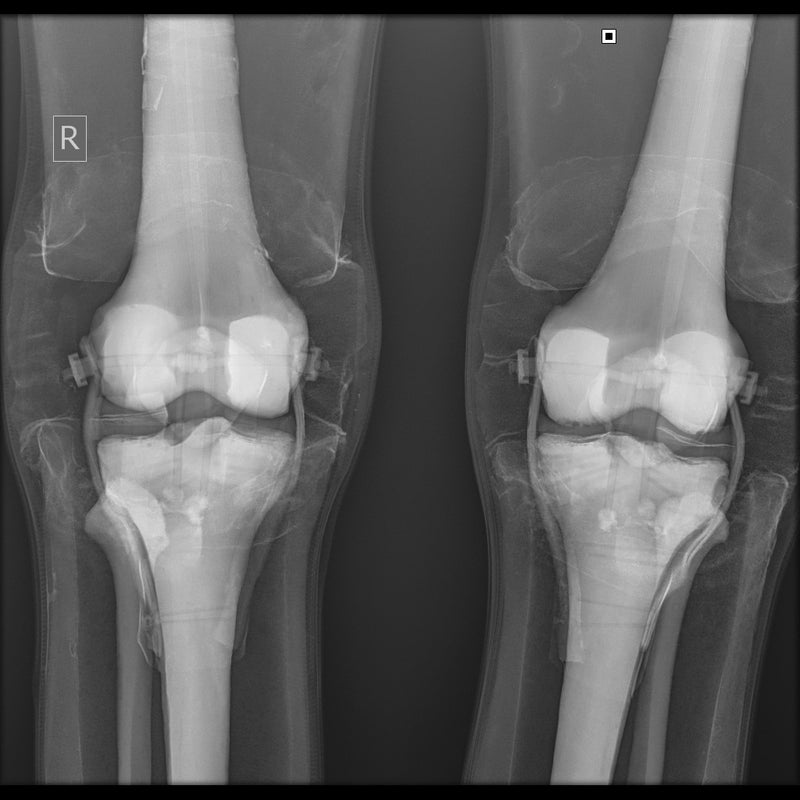
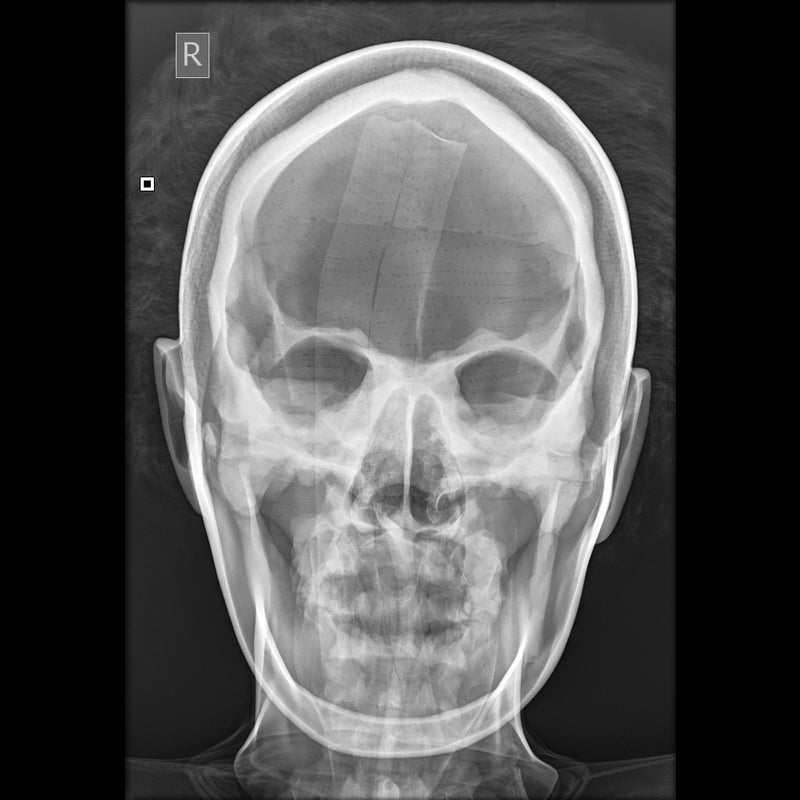
The manikin contains a fully articulated skeleton made from durable plastic with no metal components, allowing it to be used during X-ray and CT imaging. Radiolucent internal structures and realistic surface anatomy make anatomical landmarks easy to identify during positioning and imaging training.
Key Features
• Life-size radiographic positioning manikin
• Fully flexible articulated skeleton
• No metal parts for safe use with X-ray and CT
• Radiolucent internal organs and anatomical structures
• Realistic joint flexibility for positioning practice
• Durable construction for repeated training use
• Lightweight for easy handling
Training Applications
• Radiographic positioning techniques
• Patient handling training
• X-ray machine positioning
• CT positioning practice
• Imaging lab instruction
• Radiography education programs
Additional Details
• Supplied with individual X-ray images of the manikin
• Suitable for full-body positioning practice
• Designed for repeated classroom use
2-year warranty.
Ship Weight: 38 lbs
Dimensions (inches): 68.5 x 20.5 x 14
Key Features
• Life-size radiographic positioning manikin
• Fully flexible articulated skeleton
• No metal parts for safe use with X-ray and CT
• Radiolucent internal organs and anatomical structures
• Realistic joint flexibility for positioning practice
• Durable construction for repeated training use
• Lightweight for easy handling
Downloads
Individual X-Rays
Individual X-Rays for each Doll
- Each Doll is individually X-rayed
- Customers can be reassured that there are no metal parts in the Doll by referring to the set of digital X-
- Rays which are supplied with each Doll
- Images shown were taken using medium frequency generator; no grid; fine focus; 100cm S.I.D. Fuji CR system
Positioning and CT Scanning
Positioning
- The Doll is best used in the recumbent positions as, although it is possible to use an upright bucky with supports, this makes the use of positioning blocks and immobilization devices more difficult
- The Doll will lie naturally in the neutral position, prone or supine, without support
- A wide selection of positioning aids must be at hand, e.g. foam blocks, wedges, sand bags and compression band. These are essential to maintain any position other than neutral as the skin of the Doll has some resistance to overcome. This is, of course, an advantage in the teaching as it prevents the student cutting corners by omitting the use of these positioning aids
- The Doll can be positioned for all standard projections with no more difficulty than a difficult patient might present.
CT Scanning
- The X-Ray Positioning Doll was positioned and imaged for a whole body CT (Computed Tomography) investigation
- Good images in terms of body outline and fundamental structure can be obtained
- Certain areas of the skeleton structure e.g. thoracic vertebrae and the head of the femur gave similar values to the typical patient
- As the doll is very different from the human body in terms of attenuation, it cannot be used for training in, or practising exposure control
The X-Ray Radiographic Positioning Manikin is a life-size training simulator designed for teaching radiographic positioning, patient handling, and imaging procedures without exposing patients or students to radiation. Widely used by radiography programs, this simulator allows learners to practice correct positioning techniques in a safe and controlled environment.
The manikin contains a fully articulated skeleton made from durable plastic with no metal components, allowing it to be used during X-ray and CT imaging. Radiolucent internal structures and realistic surface anatomy make anatomical landmarks easy to identify during positioning and imaging training.
Key Features
• Life-size radiographic positioning manikin
• Fully flexible articulated skeleton
• No metal parts for safe use with X-ray and CT
• Radiolucent internal organs and anatomical structures
• Realistic joint flexibility for positioning practice
• Durable construction for repeated training use
• Lightweight for easy handling
Training Applications
• Radiographic positioning techniques
• Patient handling training
• X-ray machine positioning
• CT positioning practice
• Imaging lab instruction
• Radiography education programs
Additional Details
• Supplied with individual X-ray images of the manikin
• Suitable for full-body positioning practice
• Designed for repeated classroom use
2-year warranty.
Ship Weight: 38 lbs
Dimensions (inches): 68.5 x 20.5 x 14
Key Features
• Life-size radiographic positioning manikin
• Fully flexible articulated skeleton
• No metal parts for safe use with X-ray and CT
• Radiolucent internal organs and anatomical structures
• Realistic joint flexibility for positioning practice
• Durable construction for repeated training use
• Lightweight for easy handling
Downloads
Individual X-Rays
Individual X-Rays for each Doll
- Each Doll is individually X-rayed
- Customers can be reassured that there are no metal parts in the Doll by referring to the set of digital X-
- Rays which are supplied with each Doll
- Images shown were taken using medium frequency generator; no grid; fine focus; 100cm S.I.D. Fuji CR system
Positioning and CT Scanning
Positioning
- The Doll is best used in the recumbent positions as, although it is possible to use an upright bucky with supports, this makes the use of positioning blocks and immobilization devices more difficult
- The Doll will lie naturally in the neutral position, prone or supine, without support
- A wide selection of positioning aids must be at hand, e.g. foam blocks, wedges, sand bags and compression band. These are essential to maintain any position other than neutral as the skin of the Doll has some resistance to overcome. This is, of course, an advantage in the teaching as it prevents the student cutting corners by omitting the use of these positioning aids
- The Doll can be positioned for all standard projections with no more difficulty than a difficult patient might present.
CT Scanning
- The X-Ray Positioning Doll was positioned and imaged for a whole body CT (Computed Tomography) investigation
- Good images in terms of body outline and fundamental structure can be obtained
- Certain areas of the skeleton structure e.g. thoracic vertebrae and the head of the femur gave similar values to the typical patient
- As the doll is very different from the human body in terms of attenuation, it cannot be used for training in, or practising exposure control