


Monocotyledona Root (Zea Mays)
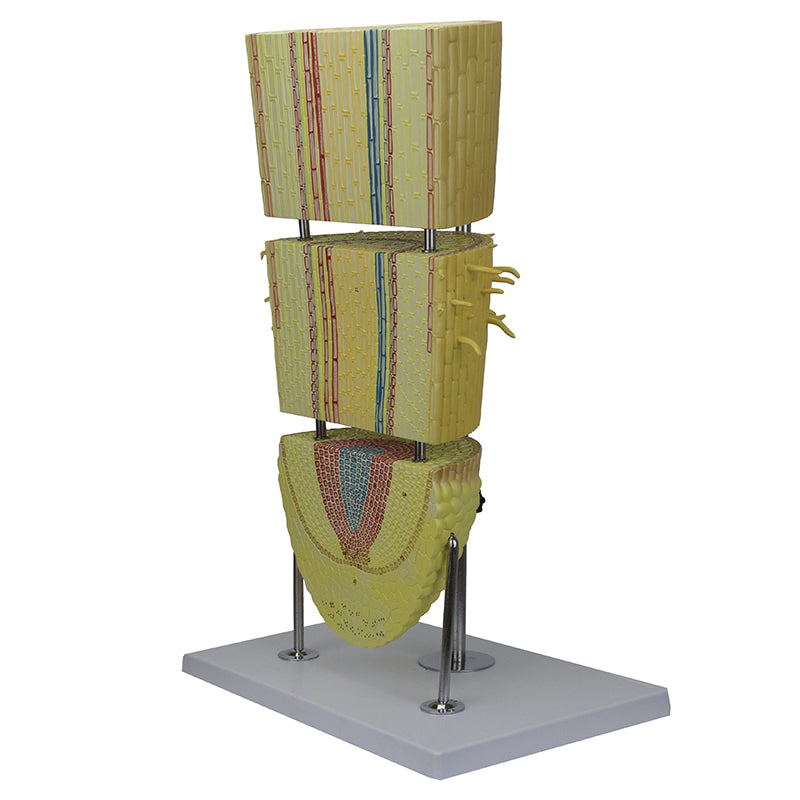
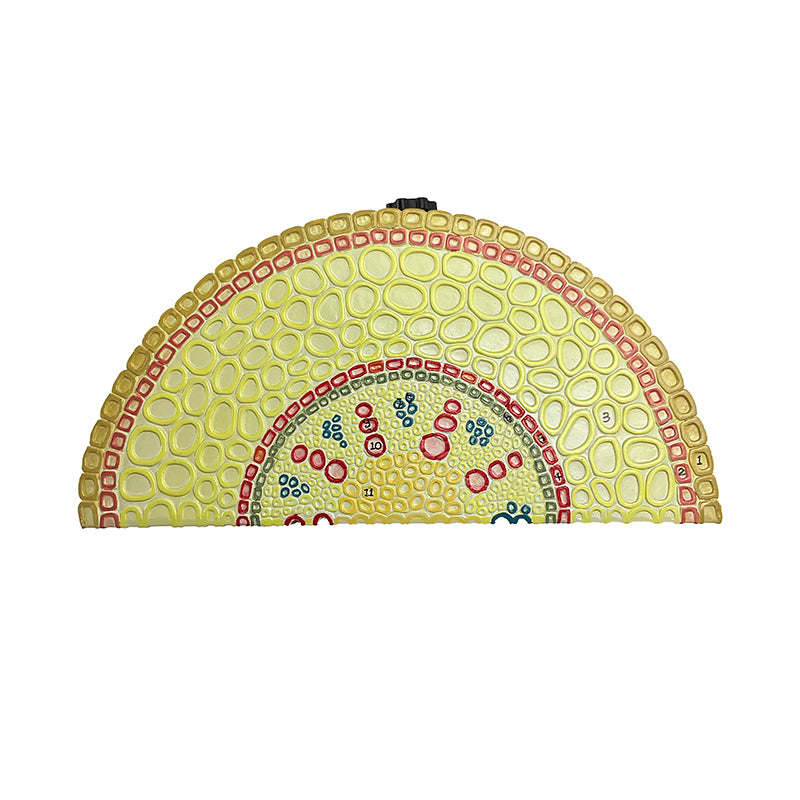
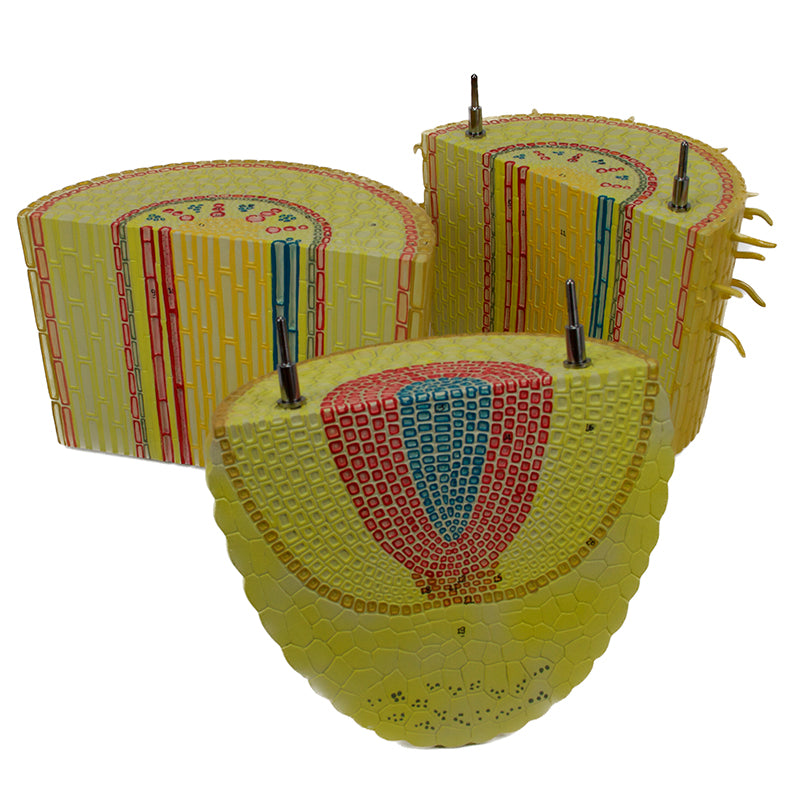
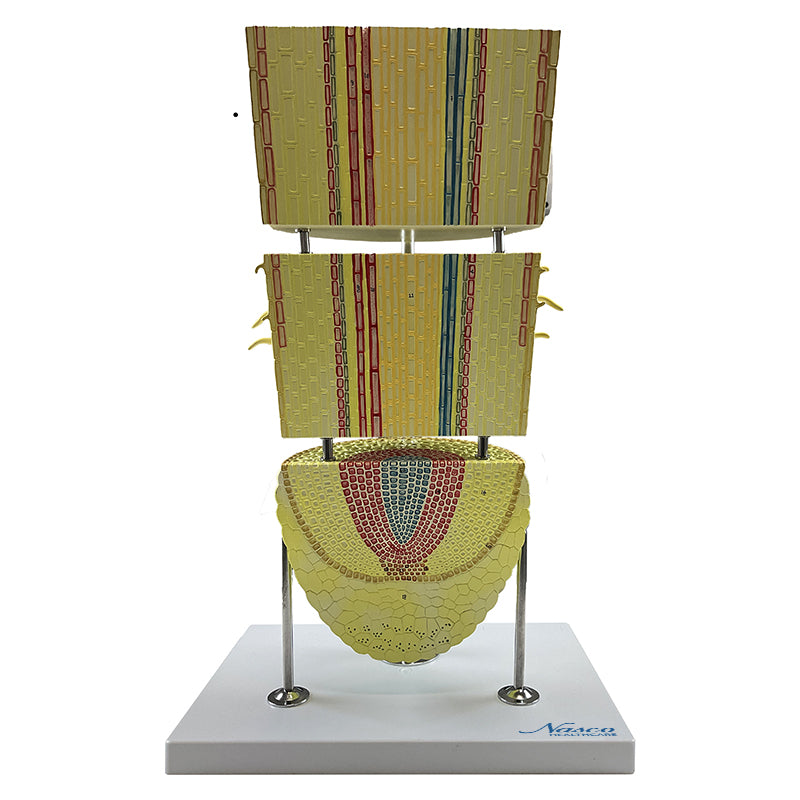
This 200x scale anatomical model of a monocot root (Zea Mays) offers a detailed representation in cross and longitudinal sections of the primary root structure, including meristematic and elongation zones. Divided into three segments and mounted on a polymer base with a metallic support, it includes an information card and an interactive 3D model with augmented reality (AR), allowing detailed analysis of structures (rhizodermis, endodermis, xylem, phloem, etc.) and immersive learning.
Manufactured from non-toxic resin, with precise molding and hand-painting, it is ideal for teaching and research in botany and biology.
Interactive 3D & Augmented Reality Learning
Use the accompanying interactive 3D and augmented reality resources, where provided, to examine and compare anatomical structures in greater detail.
Monocotyledona Root (Zea Mays) Key Features
- High-precision natural molding;
- Manufactured from stable synthetic material and resin approved in toxicological tests;
- High-fidelity replicas;
- Numbered and hand-painted;
Main Structures
- rhizodermis
- exodermis
- parenchyma cells
- Endodermis
- water permeation points
- cells without suberization
- pericycle cells
- companion cells
- Sieve tubes
- Sieve tubes
Product Specifications
- Scale: 200x natural size;
- Main material: Resin;
Monocotyledona Root (Zea Mays)
This 200x scale anatomical model of a monocot root (Zea Mays) offers a detailed representation in cross and longitudinal sections of the primary root structure, including meristematic and elongation zones. Divided into three segments and mounted on a polymer base with a metallic support, it includes an information card and an interactive 3D model with augmented reality (AR), allowing detailed analysis of structures (rhizodermis, endodermis, xylem, phloem, etc.) and immersive learning.
Manufactured from non-toxic resin, with precise molding and hand-painting, it is ideal for teaching and research in botany and biology.
Interactive 3D & Augmented Reality Learning
Use the accompanying interactive 3D and augmented reality resources, where provided, to examine and compare anatomical structures in greater detail.
Monocotyledona Root (Zea Mays) Key Features
- High-precision natural molding;
- Manufactured from stable synthetic material and resin approved in toxicological tests;
- High-fidelity replicas;
- Numbered and hand-painted;
Main Structures
- rhizodermis
- exodermis
- parenchyma cells
- Endodermis
- water permeation points
- cells without suberization
- pericycle cells
- companion cells
- Sieve tubes
- Sieve tubes
Product Specifications
- Scale: 200x natural size;
- Main material: Resin;