


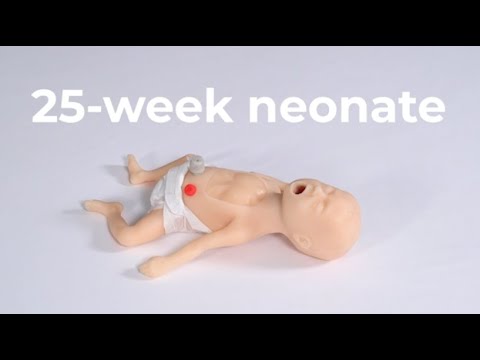
Prepare learners to care for the smallest and most vulnerable patients with realistic premature infant simulation.
The Micro-Preemie Simulator represents a 25-week gestation premature infant, helping learners develop the knowledge, practical skills, and confidence needed to manage high-risk neonatal scenarios. From airway management and vascular access to routine patient care and congenital anomalies, the simulator provides realistic, repeatable practice before caring for premature infants in clinical settings.
Designed for NICU, neonatal resuscitation, labor and delivery, neonatal transport, and nursing education, the Micro-Preemie Simulator supports competency-based learning through realistic scenarios that prepare learners for premature infant stabilization and care.
Premature Infant Care Training
Develop critical clinical skills for managing premature infants across a wide range of neonatal care scenarios.
Training includes:
- Endotracheal tube insertion
- Airway suctioning
- Positive pressure ventilation with visible chest rise
- Bilateral and unilateral lung scenarios
- NG and OG tube placement
- Feeding practice
- Umbilical access for fluid administration and blood withdrawal
- Umbilical catheterization
- Peripheral IV placement in the hand, foot, and scalp
- Patient positioning
- Bathing, cleaning, and diapering
- Skin assessment
- Stoma care and ostomy management
- Omphalocele scenarios
- Myelomeningocele (neural tube defect) scenarios
Realistic Premature Infant Anatomy
Designed to replicate the anatomy and handling characteristics of an extremely premature infant.
Features include:
- Represents a 25-week gestation premature infant
- Realistic low muscle tone
- Anatomically correct airway
- Visible chest rise during ventilation
- Bilateral and unilateral lung configurations
- Umbilical access
- Peripheral IV sites
- Interchangeable congenital anomaly modules
- Stoma for ostomy care training
Optional Patient Monitoring
Select the patient monitoring configuration to introduce physiologic assessment and clinical decision-making into neonatal scenarios.
The optional monitoring system enables learners to:
- Interpret changing vital signs
- Assess patient condition
- Respond to interventions
- Practice clinical prioritization
- Strengthen communication during team-based neonatal care
- Manage high-risk, low-frequency neonatal events using instructor-controlled scenarios
Ideal For
- NICU education
- Neonatal resuscitation training
- Labor and delivery education
- Neonatal transport programs
- Premature infant stabilization
- Nursing education
- Medical schools
- Hospital competency programs
Available Configurations
- Standard – Micro-Preemie Simulator
- With Patient Monitoring – Includes patient monitoring system with sensors and accessories for dynamic neonatal simulation scenarios.
Product Specifications
Ship Weight: 3 lbs
Dimensions (in): 13 × 11 × 6
Illustrative scenario. Incubator and equipment not included. Product may vary slightly.
Prepare learners to care for the smallest and most vulnerable patients with realistic premature infant simulation.
The Micro-Preemie Simulator represents a 25-week gestation premature infant, helping learners develop the knowledge, practical skills, and confidence needed to manage high-risk neonatal scenarios. From airway management and vascular access to routine patient care and congenital anomalies, the simulator provides realistic, repeatable practice before caring for premature infants in clinical settings.
Designed for NICU, neonatal resuscitation, labor and delivery, neonatal transport, and nursing education, the Micro-Preemie Simulator supports competency-based learning through realistic scenarios that prepare learners for premature infant stabilization and care.
Premature Infant Care Training
Develop critical clinical skills for managing premature infants across a wide range of neonatal care scenarios.
Training includes:
- Endotracheal tube insertion
- Airway suctioning
- Positive pressure ventilation with visible chest rise
- Bilateral and unilateral lung scenarios
- NG and OG tube placement
- Feeding practice
- Umbilical access for fluid administration and blood withdrawal
- Umbilical catheterization
- Peripheral IV placement in the hand, foot, and scalp
- Patient positioning
- Bathing, cleaning, and diapering
- Skin assessment
- Stoma care and ostomy management
- Omphalocele scenarios
- Myelomeningocele (neural tube defect) scenarios
Realistic Premature Infant Anatomy
Designed to replicate the anatomy and handling characteristics of an extremely premature infant.
Features include:
- Represents a 25-week gestation premature infant
- Realistic low muscle tone
- Anatomically correct airway
- Visible chest rise during ventilation
- Bilateral and unilateral lung configurations
- Umbilical access
- Peripheral IV sites
- Interchangeable congenital anomaly modules
- Stoma for ostomy care training
Optional Patient Monitoring
Select the patient monitoring configuration to introduce physiologic assessment and clinical decision-making into neonatal scenarios.
The optional monitoring system enables learners to:
- Interpret changing vital signs
- Assess patient condition
- Respond to interventions
- Practice clinical prioritization
- Strengthen communication during team-based neonatal care
- Manage high-risk, low-frequency neonatal events using instructor-controlled scenarios
Ideal For
- NICU education
- Neonatal resuscitation training
- Labor and delivery education
- Neonatal transport programs
- Premature infant stabilization
- Nursing education
- Medical schools
- Hospital competency programs
Available Configurations
- Standard – Micro-Preemie Simulator
- With Patient Monitoring – Includes patient monitoring system with sensors and accessories for dynamic neonatal simulation scenarios.
Product Specifications
Ship Weight: 3 lbs
Dimensions (in): 13 × 11 × 6
Illustrative scenario. Incubator and equipment not included. Product may vary slightly.
Prepare learners to care for the smallest and most vulnerable patients with realistic premature infant simulation.
The Micro-Preemie Simulator represents a 25-week gestation premature infant, helping learners develop the knowledge, practical skills, and confidence needed to manage high-risk neonatal scenarios. From airway management and vascular access to routine patient care and congenital anomalies, the simulator provides realistic, repeatable practice before caring for premature infants in clinical settings.
Designed for NICU, neonatal resuscitation, labor and delivery, neonatal transport, and nursing education, the Micro-Preemie Simulator supports competency-based learning through realistic scenarios that prepare learners for premature infant stabilization and care.
Premature Infant Care Training
Develop critical clinical skills for managing premature infants across a wide range of neonatal care scenarios.
Training includes:
- Endotracheal tube insertion
- Airway suctioning
- Positive pressure ventilation with visible chest rise
- Bilateral and unilateral lung scenarios
- NG and OG tube placement
- Feeding practice
- Umbilical access for fluid administration and blood withdrawal
- Umbilical catheterization
- Peripheral IV placement in the hand, foot, and scalp
- Patient positioning
- Bathing, cleaning, and diapering
- Skin assessment
- Stoma care and ostomy management
- Omphalocele scenarios
- Myelomeningocele (neural tube defect) scenarios
Realistic Premature Infant Anatomy
Designed to replicate the anatomy and handling characteristics of an extremely premature infant.
Features include:
- Represents a 25-week gestation premature infant
- Realistic low muscle tone
- Anatomically correct airway
- Visible chest rise during ventilation
- Bilateral and unilateral lung configurations
- Umbilical access
- Peripheral IV sites
- Interchangeable congenital anomaly modules
- Stoma for ostomy care training
Optional Patient Monitoring
Select the patient monitoring configuration to introduce physiologic assessment and clinical decision-making into neonatal scenarios.
The optional monitoring system enables learners to:
- Interpret changing vital signs
- Assess patient condition
- Respond to interventions
- Practice clinical prioritization
- Strengthen communication during team-based neonatal care
- Manage high-risk, low-frequency neonatal events using instructor-controlled scenarios
Ideal For
- NICU education
- Neonatal resuscitation training
- Labor and delivery education
- Neonatal transport programs
- Premature infant stabilization
- Nursing education
- Medical schools
- Hospital competency programs
Available Configurations
- Standard – Micro-Preemie Simulator
- With Patient Monitoring – Includes patient monitoring system with sensors and accessories for dynamic neonatal simulation scenarios.
Product Specifications
Ship Weight: 3 lbs
Dimensions (in): 13 × 11 × 6
Illustrative scenario. Incubator and equipment not included. Product may vary slightly.
Prepare learners to care for the smallest and most vulnerable patients with realistic premature infant simulation.
The Micro-Preemie Simulator represents a 25-week gestation premature infant, helping learners develop the knowledge, practical skills, and confidence needed to manage high-risk neonatal scenarios. From airway management and vascular access to routine patient care and congenital anomalies, the simulator provides realistic, repeatable practice before caring for premature infants in clinical settings.
Designed for NICU, neonatal resuscitation, labor and delivery, neonatal transport, and nursing education, the Micro-Preemie Simulator supports competency-based learning through realistic scenarios that prepare learners for premature infant stabilization and care.
Premature Infant Care Training
Develop critical clinical skills for managing premature infants across a wide range of neonatal care scenarios.
Training includes:
- Endotracheal tube insertion
- Airway suctioning
- Positive pressure ventilation with visible chest rise
- Bilateral and unilateral lung scenarios
- NG and OG tube placement
- Feeding practice
- Umbilical access for fluid administration and blood withdrawal
- Umbilical catheterization
- Peripheral IV placement in the hand, foot, and scalp
- Patient positioning
- Bathing, cleaning, and diapering
- Skin assessment
- Stoma care and ostomy management
- Omphalocele scenarios
- Myelomeningocele (neural tube defect) scenarios
Realistic Premature Infant Anatomy
Designed to replicate the anatomy and handling characteristics of an extremely premature infant.
Features include:
- Represents a 25-week gestation premature infant
- Realistic low muscle tone
- Anatomically correct airway
- Visible chest rise during ventilation
- Bilateral and unilateral lung configurations
- Umbilical access
- Peripheral IV sites
- Interchangeable congenital anomaly modules
- Stoma for ostomy care training
Optional Patient Monitoring
Select the patient monitoring configuration to introduce physiologic assessment and clinical decision-making into neonatal scenarios.
The optional monitoring system enables learners to:
- Interpret changing vital signs
- Assess patient condition
- Respond to interventions
- Practice clinical prioritization
- Strengthen communication during team-based neonatal care
- Manage high-risk, low-frequency neonatal events using instructor-controlled scenarios
Ideal For
- NICU education
- Neonatal resuscitation training
- Labor and delivery education
- Neonatal transport programs
- Premature infant stabilization
- Nursing education
- Medical schools
- Hospital competency programs
Available Configurations
- Standard – Micro-Preemie Simulator
- With Patient Monitoring – Includes patient monitoring system with sensors and accessories for dynamic neonatal simulation scenarios.
Product Specifications
Ship Weight: 3 lbs
Dimensions (in): 13 × 11 × 6
Illustrative scenario. Incubator and equipment not included. Product may vary slightly.
Key Features
- Represents a 25-week gestation premature infant
- Realistic airway management including endotracheal intubation and suctioning
- Positive pressure ventilation with visible chest rise
- Bilateral and unilateral lung configurations
- NG and OG tube placement and feeding practice
- Umbilical access for fluid administration and blood withdrawal
- Umbilical catheterization training
- Peripheral IV access in the hand, foot, and scalp
- Realistic low muscle tone for authentic positioning and handling
- Bathing, diapering, skin assessment, and routine patient care
- Omphalocele and myelomeningocele (neural tube defect) modules
- Stoma care and ostomy management
- Optional patient monitoring for clinical decision-making and team-based neonatal care
- Available in light and dark skin tones
Key Features
- Represents a 25-week gestation premature infant
- Realistic airway management including endotracheal intubation and suctioning
- Positive pressure ventilation with visible chest rise
- Bilateral and unilateral lung configurations
- NG and OG tube placement and feeding practice
- Umbilical access for fluid administration and blood withdrawal
- Umbilical catheterization training
- Peripheral IV access in the hand, foot, and scalp
- Realistic low muscle tone for authentic positioning and handling
- Bathing, diapering, skin assessment, and routine patient care
- Omphalocele and myelomeningocele (neural tube defect) modules
- Stoma care and ostomy management
- Optional patient monitoring for clinical decision-making and team-based neonatal care
- Available in light and dark skin tones
Key Features
- Represents a 25-week gestation premature infant
- Realistic airway management including endotracheal intubation and suctioning
- Positive pressure ventilation with visible chest rise
- Bilateral and unilateral lung configurations
- NG and OG tube placement and feeding practice
- Umbilical access for fluid administration and blood withdrawal
- Umbilical catheterization training
- Peripheral IV access in the hand, foot, and scalp
- Realistic low muscle tone for authentic positioning and handling
- Bathing, diapering, skin assessment, and routine patient care
- Omphalocele and myelomeningocele (neural tube defect) modules
- Stoma care and ostomy management
- Optional patient monitoring for clinical decision-making and team-based neonatal care
- Available in light and dark skin tones
Key Features
- Represents a 25-week gestation premature infant
- Realistic airway management including endotracheal intubation and suctioning
- Positive pressure ventilation with visible chest rise
- Bilateral and unilateral lung configurations
- NG and OG tube placement and feeding practice
- Umbilical access for fluid administration and blood withdrawal
- Umbilical catheterization training
- Peripheral IV access in the hand, foot, and scalp
- Realistic low muscle tone for authentic positioning and handling
- Bathing, diapering, skin assessment, and routine patient care
- Omphalocele and myelomeningocele (neural tube defect) modules
- Stoma care and ostomy management
- Optional patient monitoring for clinical decision-making and team-based neonatal care
- Available in light and dark skin tones
Downloads
Parts
- LF01206 A Micro-Preemie Consumables Kit
- LF01211 Micro-Preemie Hat
- LF01282 Micro-Preemie Bilateral Chest Block, Light
- LF01283 Micro-Preemie Unilateral Chest Block, Light
- LF01284 Micro-Preemie Airway
- LF01285 Micro-Preemie Kit (Umbilical Cord, Defects)
- LF01288 Micro-Preemie Stoma, Pkg. of 5, Lights
- LF03461 Carry Bag
Prepare learners to care for the smallest and most vulnerable patients with realistic premature infant simulation.
The Micro-Preemie Simulator represents a 25-week gestation premature infant, helping learners develop the knowledge, practical skills, and confidence needed to manage high-risk neonatal scenarios. From airway management and vascular access to routine patient care and congenital anomalies, the simulator provides realistic, repeatable practice before caring for premature infants in clinical settings.
Designed for NICU, neonatal resuscitation, labor and delivery, neonatal transport, and nursing education, the Micro-Preemie Simulator supports competency-based learning through realistic scenarios that prepare learners for premature infant stabilization and care.
Premature Infant Care Training
Develop critical clinical skills for managing premature infants across a wide range of neonatal care scenarios.
Training includes:
- Endotracheal tube insertion
- Airway suctioning
- Positive pressure ventilation with visible chest rise
- Bilateral and unilateral lung scenarios
- NG and OG tube placement
- Feeding practice
- Umbilical access for fluid administration and blood withdrawal
- Umbilical catheterization
- Peripheral IV placement in the hand, foot, and scalp
- Patient positioning
- Bathing, cleaning, and diapering
- Skin assessment
- Stoma care and ostomy management
- Omphalocele scenarios
- Myelomeningocele (neural tube defect) scenarios
Realistic Premature Infant Anatomy
Designed to replicate the anatomy and handling characteristics of an extremely premature infant.
Features include:
- Represents a 25-week gestation premature infant
- Realistic low muscle tone
- Anatomically correct airway
- Visible chest rise during ventilation
- Bilateral and unilateral lung configurations
- Umbilical access
- Peripheral IV sites
- Interchangeable congenital anomaly modules
- Stoma for ostomy care training
Optional Patient Monitoring
Select the patient monitoring configuration to introduce physiologic assessment and clinical decision-making into neonatal scenarios.
The optional monitoring system enables learners to:
- Interpret changing vital signs
- Assess patient condition
- Respond to interventions
- Practice clinical prioritization
- Strengthen communication during team-based neonatal care
- Manage high-risk, low-frequency neonatal events using instructor-controlled scenarios
Ideal For
- NICU education
- Neonatal resuscitation training
- Labor and delivery education
- Neonatal transport programs
- Premature infant stabilization
- Nursing education
- Medical schools
- Hospital competency programs
Available Configurations
- Standard – Micro-Preemie Simulator
- With Patient Monitoring – Includes patient monitoring system with sensors and accessories for dynamic neonatal simulation scenarios.
Product Specifications
Ship Weight: 3 lbs
Dimensions (in): 13 × 11 × 6
Illustrative scenario. Incubator and equipment not included. Product may vary slightly.
Prepare learners to care for the smallest and most vulnerable patients with realistic premature infant simulation.
The Micro-Preemie Simulator represents a 25-week gestation premature infant, helping learners develop the knowledge, practical skills, and confidence needed to manage high-risk neonatal scenarios. From airway management and vascular access to routine patient care and congenital anomalies, the simulator provides realistic, repeatable practice before caring for premature infants in clinical settings.
Designed for NICU, neonatal resuscitation, labor and delivery, neonatal transport, and nursing education, the Micro-Preemie Simulator supports competency-based learning through realistic scenarios that prepare learners for premature infant stabilization and care.
Premature Infant Care Training
Develop critical clinical skills for managing premature infants across a wide range of neonatal care scenarios.
Training includes:
- Endotracheal tube insertion
- Airway suctioning
- Positive pressure ventilation with visible chest rise
- Bilateral and unilateral lung scenarios
- NG and OG tube placement
- Feeding practice
- Umbilical access for fluid administration and blood withdrawal
- Umbilical catheterization
- Peripheral IV placement in the hand, foot, and scalp
- Patient positioning
- Bathing, cleaning, and diapering
- Skin assessment
- Stoma care and ostomy management
- Omphalocele scenarios
- Myelomeningocele (neural tube defect) scenarios
Realistic Premature Infant Anatomy
Designed to replicate the anatomy and handling characteristics of an extremely premature infant.
Features include:
- Represents a 25-week gestation premature infant
- Realistic low muscle tone
- Anatomically correct airway
- Visible chest rise during ventilation
- Bilateral and unilateral lung configurations
- Umbilical access
- Peripheral IV sites
- Interchangeable congenital anomaly modules
- Stoma for ostomy care training
Optional Patient Monitoring
Select the patient monitoring configuration to introduce physiologic assessment and clinical decision-making into neonatal scenarios.
The optional monitoring system enables learners to:
- Interpret changing vital signs
- Assess patient condition
- Respond to interventions
- Practice clinical prioritization
- Strengthen communication during team-based neonatal care
- Manage high-risk, low-frequency neonatal events using instructor-controlled scenarios
Ideal For
- NICU education
- Neonatal resuscitation training
- Labor and delivery education
- Neonatal transport programs
- Premature infant stabilization
- Nursing education
- Medical schools
- Hospital competency programs
Available Configurations
- Standard – Micro-Preemie Simulator
- With Patient Monitoring – Includes patient monitoring system with sensors and accessories for dynamic neonatal simulation scenarios.
Product Specifications
Ship Weight: 3 lbs
Dimensions (in): 13 × 11 × 6
Illustrative scenario. Incubator and equipment not included. Product may vary slightly.
Prepare learners to care for the smallest and most vulnerable patients with realistic premature infant simulation.
The Micro-Preemie Simulator represents a 25-week gestation premature infant, helping learners develop the knowledge, practical skills, and confidence needed to manage high-risk neonatal scenarios. From airway management and vascular access to routine patient care and congenital anomalies, the simulator provides realistic, repeatable practice before caring for premature infants in clinical settings.
Designed for NICU, neonatal resuscitation, labor and delivery, neonatal transport, and nursing education, the Micro-Preemie Simulator supports competency-based learning through realistic scenarios that prepare learners for premature infant stabilization and care.
Premature Infant Care Training
Develop critical clinical skills for managing premature infants across a wide range of neonatal care scenarios.
Training includes:
- Endotracheal tube insertion
- Airway suctioning
- Positive pressure ventilation with visible chest rise
- Bilateral and unilateral lung scenarios
- NG and OG tube placement
- Feeding practice
- Umbilical access for fluid administration and blood withdrawal
- Umbilical catheterization
- Peripheral IV placement in the hand, foot, and scalp
- Patient positioning
- Bathing, cleaning, and diapering
- Skin assessment
- Stoma care and ostomy management
- Omphalocele scenarios
- Myelomeningocele (neural tube defect) scenarios
Realistic Premature Infant Anatomy
Designed to replicate the anatomy and handling characteristics of an extremely premature infant.
Features include:
- Represents a 25-week gestation premature infant
- Realistic low muscle tone
- Anatomically correct airway
- Visible chest rise during ventilation
- Bilateral and unilateral lung configurations
- Umbilical access
- Peripheral IV sites
- Interchangeable congenital anomaly modules
- Stoma for ostomy care training
Optional Patient Monitoring
Select the patient monitoring configuration to introduce physiologic assessment and clinical decision-making into neonatal scenarios.
The optional monitoring system enables learners to:
- Interpret changing vital signs
- Assess patient condition
- Respond to interventions
- Practice clinical prioritization
- Strengthen communication during team-based neonatal care
- Manage high-risk, low-frequency neonatal events using instructor-controlled scenarios
Ideal For
- NICU education
- Neonatal resuscitation training
- Labor and delivery education
- Neonatal transport programs
- Premature infant stabilization
- Nursing education
- Medical schools
- Hospital competency programs
Available Configurations
- Standard – Micro-Preemie Simulator
- With Patient Monitoring – Includes patient monitoring system with sensors and accessories for dynamic neonatal simulation scenarios.
Product Specifications
Ship Weight: 3 lbs
Dimensions (in): 13 × 11 × 6
Illustrative scenario. Incubator and equipment not included. Product may vary slightly.
Prepare learners to care for the smallest and most vulnerable patients with realistic premature infant simulation.
The Micro-Preemie Simulator represents a 25-week gestation premature infant, helping learners develop the knowledge, practical skills, and confidence needed to manage high-risk neonatal scenarios. From airway management and vascular access to routine patient care and congenital anomalies, the simulator provides realistic, repeatable practice before caring for premature infants in clinical settings.
Designed for NICU, neonatal resuscitation, labor and delivery, neonatal transport, and nursing education, the Micro-Preemie Simulator supports competency-based learning through realistic scenarios that prepare learners for premature infant stabilization and care.
Premature Infant Care Training
Develop critical clinical skills for managing premature infants across a wide range of neonatal care scenarios.
Training includes:
- Endotracheal tube insertion
- Airway suctioning
- Positive pressure ventilation with visible chest rise
- Bilateral and unilateral lung scenarios
- NG and OG tube placement
- Feeding practice
- Umbilical access for fluid administration and blood withdrawal
- Umbilical catheterization
- Peripheral IV placement in the hand, foot, and scalp
- Patient positioning
- Bathing, cleaning, and diapering
- Skin assessment
- Stoma care and ostomy management
- Omphalocele scenarios
- Myelomeningocele (neural tube defect) scenarios
Realistic Premature Infant Anatomy
Designed to replicate the anatomy and handling characteristics of an extremely premature infant.
Features include:
- Represents a 25-week gestation premature infant
- Realistic low muscle tone
- Anatomically correct airway
- Visible chest rise during ventilation
- Bilateral and unilateral lung configurations
- Umbilical access
- Peripheral IV sites
- Interchangeable congenital anomaly modules
- Stoma for ostomy care training
Optional Patient Monitoring
Select the patient monitoring configuration to introduce physiologic assessment and clinical decision-making into neonatal scenarios.
The optional monitoring system enables learners to:
- Interpret changing vital signs
- Assess patient condition
- Respond to interventions
- Practice clinical prioritization
- Strengthen communication during team-based neonatal care
- Manage high-risk, low-frequency neonatal events using instructor-controlled scenarios
Ideal For
- NICU education
- Neonatal resuscitation training
- Labor and delivery education
- Neonatal transport programs
- Premature infant stabilization
- Nursing education
- Medical schools
- Hospital competency programs
Available Configurations
- Standard – Micro-Preemie Simulator
- With Patient Monitoring – Includes patient monitoring system with sensors and accessories for dynamic neonatal simulation scenarios.
Product Specifications
Ship Weight: 3 lbs
Dimensions (in): 13 × 11 × 6
Illustrative scenario. Incubator and equipment not included. Product may vary slightly.
Key Features
- Represents a 25-week gestation premature infant
- Realistic airway management including endotracheal intubation and suctioning
- Positive pressure ventilation with visible chest rise
- Bilateral and unilateral lung configurations
- NG and OG tube placement and feeding practice
- Umbilical access for fluid administration and blood withdrawal
- Umbilical catheterization training
- Peripheral IV access in the hand, foot, and scalp
- Realistic low muscle tone for authentic positioning and handling
- Bathing, diapering, skin assessment, and routine patient care
- Omphalocele and myelomeningocele (neural tube defect) modules
- Stoma care and ostomy management
- Optional patient monitoring for clinical decision-making and team-based neonatal care
- Available in light and dark skin tones
Key Features
- Represents a 25-week gestation premature infant
- Realistic airway management including endotracheal intubation and suctioning
- Positive pressure ventilation with visible chest rise
- Bilateral and unilateral lung configurations
- NG and OG tube placement and feeding practice
- Umbilical access for fluid administration and blood withdrawal
- Umbilical catheterization training
- Peripheral IV access in the hand, foot, and scalp
- Realistic low muscle tone for authentic positioning and handling
- Bathing, diapering, skin assessment, and routine patient care
- Omphalocele and myelomeningocele (neural tube defect) modules
- Stoma care and ostomy management
- Optional patient monitoring for clinical decision-making and team-based neonatal care
- Available in light and dark skin tones
Key Features
- Represents a 25-week gestation premature infant
- Realistic airway management including endotracheal intubation and suctioning
- Positive pressure ventilation with visible chest rise
- Bilateral and unilateral lung configurations
- NG and OG tube placement and feeding practice
- Umbilical access for fluid administration and blood withdrawal
- Umbilical catheterization training
- Peripheral IV access in the hand, foot, and scalp
- Realistic low muscle tone for authentic positioning and handling
- Bathing, diapering, skin assessment, and routine patient care
- Omphalocele and myelomeningocele (neural tube defect) modules
- Stoma care and ostomy management
- Optional patient monitoring for clinical decision-making and team-based neonatal care
- Available in light and dark skin tones
Key Features
- Represents a 25-week gestation premature infant
- Realistic airway management including endotracheal intubation and suctioning
- Positive pressure ventilation with visible chest rise
- Bilateral and unilateral lung configurations
- NG and OG tube placement and feeding practice
- Umbilical access for fluid administration and blood withdrawal
- Umbilical catheterization training
- Peripheral IV access in the hand, foot, and scalp
- Realistic low muscle tone for authentic positioning and handling
- Bathing, diapering, skin assessment, and routine patient care
- Omphalocele and myelomeningocele (neural tube defect) modules
- Stoma care and ostomy management
- Optional patient monitoring for clinical decision-making and team-based neonatal care
- Available in light and dark skin tones
Downloads
Parts
- LF01206 A Micro-Preemie Consumables Kit
- LF01211 Micro-Preemie Hat
- LF01282 Micro-Preemie Bilateral Chest Block, Light
- LF01283 Micro-Preemie Unilateral Chest Block, Light
- LF01284 Micro-Preemie Airway
- LF01285 Micro-Preemie Kit (Umbilical Cord, Defects)
- LF01288 Micro-Preemie Stoma, Pkg. of 5, Lights
- LF03461 Carry Bag